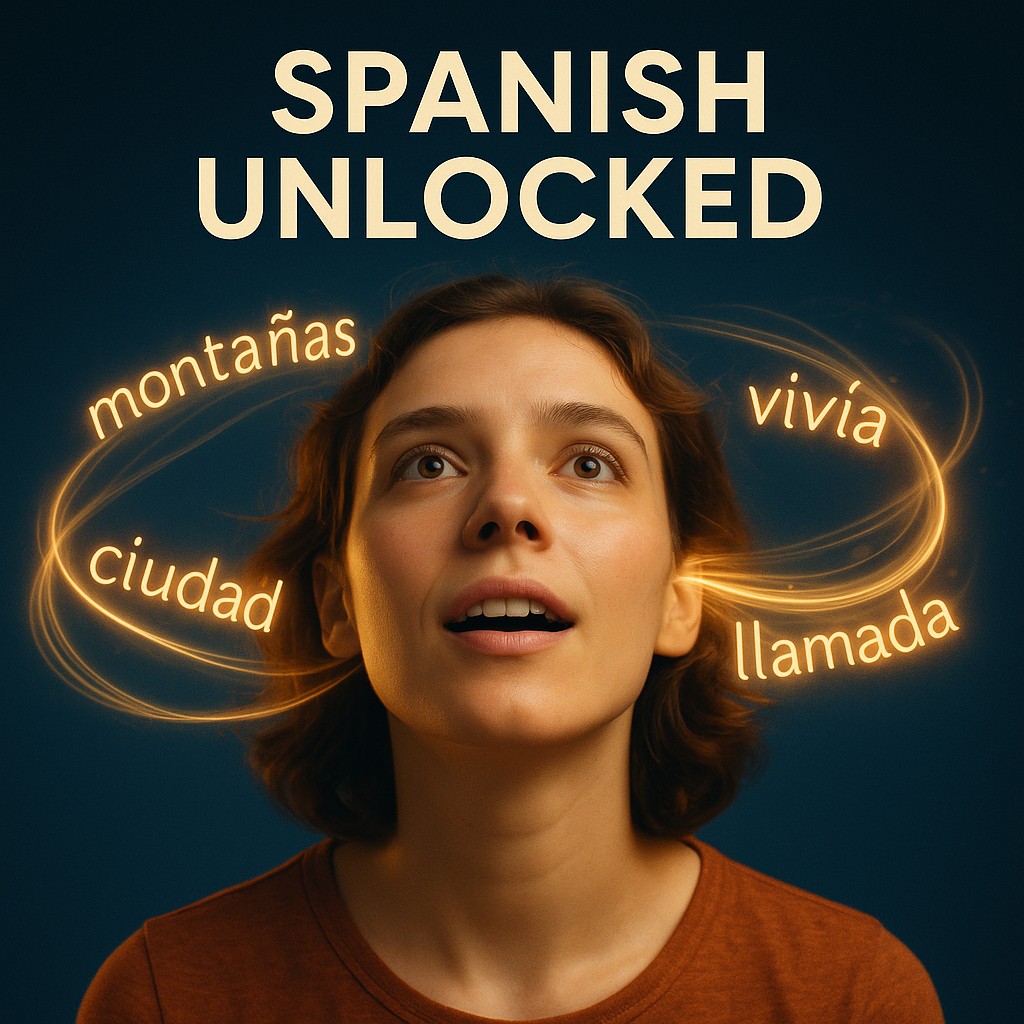
If you’ve ever taught or learned Spanish, you know how overwhelming the early stages can be — irregular verbs, confusing politeness formulas, forgettable vocabulary lists, and a lack of real-world context. That’s where the LingoWeave method, as used in the “Spanish Unlocked” course, truly shines. Built on a foundation of story-based language acquisition and comprehensible input, this course offers a powerful, emotionally engaging, and pedagogically sound supplement for language teachers and self-learners alike.
Let’s break down the specific problems it solves — and how — based on its rich narrative design.
🔍 1. Specific Vocabulary, Structures, and Communicative Skills Covered
Each story in the course focuses on concrete, functional language themes critical for beginner and early intermediate learners. These include:
- Greetings and Introductions: “Hola, ¿cómo estás?”, “Me llamo…”, “Mucho gusto”
- Expressing Emotion and Politeness: “Lo siento”, “Perdón por…”, “Gracias”, “Buena suerte”
- Verb Conjugation in Context: Frequent verbs like ser, estar, vivir, venir, decir, and reflexives like llamarse
- Making Requests and Real-World Interactions: “¿Cuánto cuesta?”, “¿Puedo pagar con…?”, “Quisiera…”
- Directional and Spatial Language: “Cruzar”, “seguir”, “a la derecha”, used within urban or travel settings
- Thematic Vocabulary: Food, shopping, travel, feelings, and natural elements, embedded in story arcs
These skills aren’t just introduced — they’re experienced by the learner through emotionally charged, story-based immersion that reinforces natural usage.
🧠 2. Language Learning Challenges Addressed
Many typical challenges faced by learners are directly tackled:
a. Verb Tense Confusion
Learners often stumble with conjugation, especially the preterite and imperfect forms. By embedding these in compelling narrative contexts, learners absorb them naturally (e.g., “dijo”, “se rompió”, “había recogido”).
b. Reflexive and Modal Verb Use
Reflexives like asegurarse, relajarse, encontrarse are presented in context (checking into hotels, dealing with lost items), which demystifies their structure and usage.
c. Cultural and Pragmatic Usage
Politeness markers (quisiera, ¿puede…?, por favor), indirect requests, and formal vs. informal address are modeled in real conversational contexts — an often neglected part of textbook learning.
d. Listening Comprehension
The audio-narrated structure with optional transcripts allows for passive listening, supported by gradual bilingual layering — perfect for learners to build confidence at their own pace.
e. Memorization Burnout
Instead of flashcards or drills, the course uses emotionally relevant storytelling to introduce and repeat vocabulary and structures, promoting natural recall.
❤️ 3. Emotion, Repetition, and Context = Retention
The course masterfully uses:
- Repetition with variation: Phrases are revisited in different situations, increasing retention without redundancy.
- Emotional anchors: Characters experience fear, hunger, gratitude, confusion, awe — making expressions like “Estoy hambrienta” or “Estoy agradecida” far more memorable.
- Narrative drive: Each story has suspense, humor, or mystery (e.g., lost passports, magical markets, vanishing cities), making learners want to hear them again — a key to spaced repetition success.
- Thematic progression: From greetings to food, shopping, and travel, the course builds layers of understanding across episodes, avoiding the “grammar dump” trap.
🌎 4. Cultural and Pragmatic Insights
Cultural fluency isn’t an afterthought — it’s woven into each story:
- Shopping etiquette: Learners encounter how to request discounts or pay with cash/card in Spanish-speaking markets.
- Mythical and magical realism elements: Stories like “El mercado de la magia” echo Latin American literary traditions, deepening cultural relevance.
- Politeness and interpersonal interaction: Reflects norms like using usted, formal expressions, or showing gratitude appropriately — crucial for real-world travel or communication.
- Urban and rural life: Learners navigate cities, forests, plazas, and local legends, getting a feel for environments common in Latin America and Spain.
🧾 Summary Table: What “Spanish Unlocked” Solves
| Language Challenge | LingoWeave Story-Based Solution |
|---|---|
| Forgettable greetings and basic phrases | Used repeatedly in dialogue with real emotional stakes |
| Trouble with politeness and emotion | Phrases modeled in authentic, empathetic contexts |
| Confusion with verb conjugations | Introduced naturally through context-rich narration |
| Poor conversation timing and flow | Realistic turn-taking in dialogues builds rhythm |
| Vocab not sticking | Anchored in visual, emotional, or narrative cues |
| Weak listening skills | Audio stories with layered support and replays |
| Cultural misunderstanding | Includes pragmatic language and cultural norms |
| Overload from memorizing lists | Focus on meaning-first acquisition in context |
🎉 For Teachers: Why It’s a Fantastic Supplement
Spanish instructors will find “Spanish Unlocked” to be a goldmine of supplemental material. It:
- Reinforces classroom grammar without dry drills
- Provides examples of real-world interaction for listening or speaking practice
- Allows for flipped-classroom or homework assignments with optional transcripts
- Supports diverse learner types — especially auditory and story-driven learners
- Saves time correcting repetitive errors by addressing them in narrative form
If you’re a teacher or learner looking to bring meaning, emotion, and real-life function into your Spanish journey, check out “Spanish Unlocked” on YouTube.
🌟 Let your students fall into the story — and rise with the language.
 LingoWeave