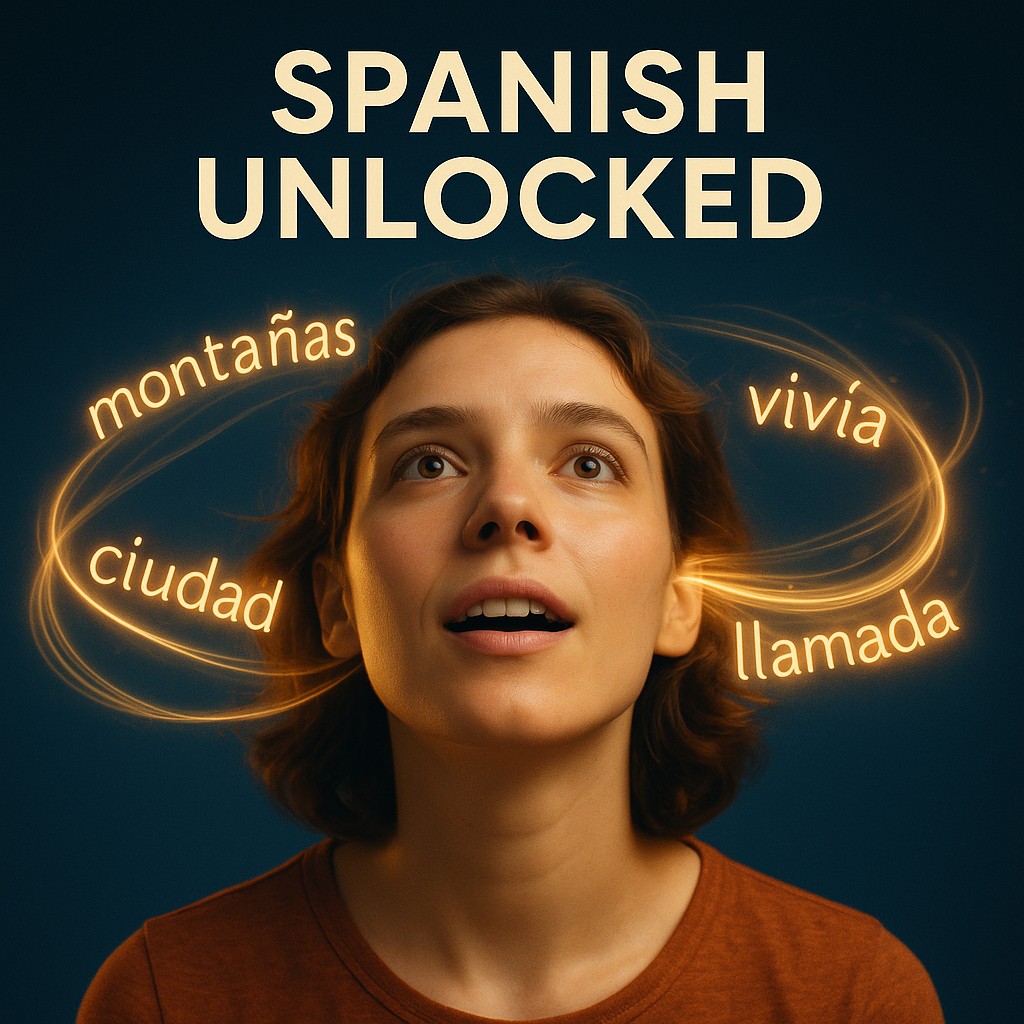
Understand your first Spanish story sooner than you think.
The Tío Chispa series is designed to help you build Spanish listening comprehension through short, engaging stories.
Each episode uses the LingoWeave method, where English narration gradually transforms into Spanish as the story repeats.
Instead of memorizing vocabulary lists or studying grammar rules, you simply follow the story as the language slowly shifts from English to Spanish.
By the end of the episode, the story is fully in Spanish — and surprisingly understandable.
Try One Story
Press play and see what happens.
At first, the story sounds mostly like English.
But as the episode continues, Spanish quietly takes over.
By the end, the story is completely in Spanish — and somehow you can still follow it.
That is the LingoWeave effect.
Spanish Listening Practice Through Story
Listening is one of the most important — and often most difficult — parts of learning Spanish.
Many learners find that natural Spanish speech sounds too fast or too dense at first.
The Tío Chispa series helps bridge that gap by letting you:
• hear the same story multiple times
• gradually increase the Spanish content
• understand meaning through context
• become familiar with natural sentence patterns
Over time, Spanish stops sounding like noise and begins to feel predictable and meaningful.
How the LingoWeave Method Work
Each episode tells the same short story six times, but with progressively more Spanish.
Think of it as a language bridge from English to Spanish.
Step 1 — Mostly English
The story begins mostly in English so you immediately understand what is happening.
Step 2 — Spanish Begins
Some English words are replaced with Spanish.
Step 3 — More Spanish
More of the narration shifts into Spanish while the story remains familiar.
Step 4 — Spanish Takes Over
Most of the narration is now Spanish.
Step 5 — Nearly All Spanish
Almost everything is Spanish and comprehension continues to grow.
Step 6 — Full Spanish Story
The final version is completely in Spanish.
Why Stories Help You Learn
Human brains are naturally wired for stories.
Stories activate memory, prediction, and emotion — the same systems that help us acquire language naturally.
Through repeated stories you begin to recognize:
• vocabulary through context
• sentence patterns
• verb usage
• rhythm and flow of Spanish
Instead of studying Spanish rules, you are experiencing Spanish meaning.
Meet Tío Chispa
Tío Chispa lives in a lively neighborhood where everyday situations sometimes turn strange, humorous, or mysterious.
Across the episodes you may encounter:
• curious neighbors
• unexpected problems
• everyday adventures
• humorous misunderstandings
• surprising twists
The stories are short, vivid, and designed for repeat listening.
Best Way to Use the Series
You can use the stories in a very simple way:
1️⃣ Listen to an episode from beginning to end.
2️⃣ Follow the story as Spanish gradually increases.
3️⃣ Listen again another day.
Each time you return to the story, you will understand more Spanish than before.
Who Tío Chispa Is For
This series is designed for learners who want to build real listening comprehension.
It may be especially helpful if you:
• want to understand spoken Spanish more easily
• prefer learning through stories instead of exercises
• enjoy listening practice you can repeat many times
• want Spanish to feel natural rather than memorized
You do not need prior Spanish knowledge.
The LingoWeave method begins with English support and gradually introduces Spanish.
Who This Series May Not Be For
This series may not be the right approach if you are looking for:
• traditional grammar lessons
• vocabulary lists to memorize
• classroom-style instruction
• quick phrase guides for travel
Tío Chispa focuses primarily on building listening comprehension through story.
About the LingoWeave Method
LingoWeave is a language-learning approach based on a simple idea:
New language becomes easier to understand when it grows out of familiar meaning.
Instead of presenting Spanish as a completely separate system, LingoWeave gradually weaves Spanish into English narration.
Because the story remains the same while the language changes, the brain can focus on recognizing patterns rather than decoding unknown content.
About the Tío Chispa Stories
The Tío Chispa series was created as a storytelling laboratory for the LingoWeave method.
Each episode is designed to:
• introduce Spanish vocabulary naturally
• reinforce meaning through repetition
• build listening confidence
• remain entertaining as a story
About LingoWeave
LingoWeave is an independent project exploring how storytelling, repetition, and bilingual scaffolding can accelerate language comprehension.
The goal is simple:
Help learners reach the moment when Spanish stops sounding like noise and starts sounding like meaning.
Start Listening
You can explore the full Tío Chispa story playlist here. Press play, follow the story, and let the language weave itself together.
LingoWeave
Language learning through story and repetition.